Signs You Need Furniture Restoration — And What To Do Next
By J Hardy French Polishing
How to tell when a piece needs furniture restoration
Your favourite chair or a family dining table ages quietly. Sometimes a problem is obvious; other times the damage is creeping in. Here are the clear signs you need furniture restoration — and what to do before you call a specialist.
Visible finish failure
- Finish peeling, flaking or becoming powdery (crazing) is not just cosmetic. It exposes the timber to moisture and staining.
- Patchy gloss or dull areas where old polish has worn through — especially on table tops and armrests — shows the finish has reached the end of its life.
Immediate action: stop using silicone or oil-based ‘quick-fix’ sprays. Dust with a soft cloth and keep the piece away from direct sunlight and radiators to prevent further collapse of the finish.
Surface damage: scratches, chips and stains
- Deep scratches and chips in solid timber or veneer loss on tabletops and cabinet edges indicate repair is needed before structural issues develop.
- Water rings, heat marks or ink stains that sit in the finish and won’t buff out.
Immediate action: photograph the damage and test any cleaning on a concealed area. For veneer lifts, don’t peel or force the veneer back — loose veneer needs professional re-adhering with the correct adhesives and clamping.
Structural problems: wobbles, loose joints and broken rails
- A chair or table that rocks, or drawers that don’t run square, points to failing joints or worn tenons.
- Splits down the grain, sagging seat frames or broken rails require timber repair or replacement of fixings.
Immediate action: avoid heavy use. If a loose joint can be safely clamped, stabilise it with a padded clamp for transport — but don’t attempt aggressive regluing without assessing the construction first.
Woodworm, mould and infestation signs
- Small round holes with powdery frass or a musty smell can indicate woodworm or active insect attack.
- Mould from prolonged damp will stain the surface and weaken joints.
Immediate action: isolate the item from other furniture and the house. Take clear close-up photos of the holes or mould and contact a specialist — wrong treatments can make infestations worse.
Upholstery failures
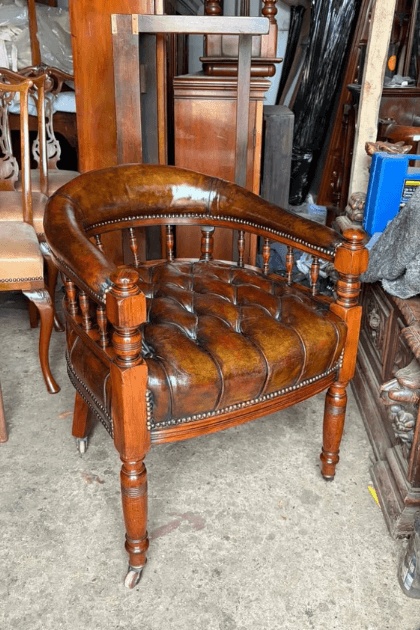
- Compressed or sagging seats, torn fabric, exposed springs, or failing webbing show the upholstery has reached the end of its useful life.
- Smells trapped in the foam or stuffing are difficult to remove without replacement.
Immediate action: vacuum carefully and avoid heavy steam cleaning. Document the fabric and construction — original linings, trims or horsehair stuffing can be conserved or sympathetically replaced depending on the piece’s age and value.
What to do next: a practical step‑by‑step
- Stop DIY panic moves. Abrasive sanding, aggressive strippers, household oil polishes or varnish over old finishes can destroy patina and make professional restoration more invasive.
- Document the piece. Take photos from several angles, note maker’s marks, labels, or stamps. Any provenance helps a conservator choose the right method.
- Assess priority. Is it a sentimental heirloom, an antique with market value, or a modern bespoke piece? Conservation philosophy differs: antiques often require minimal intervention to retain patina; contemporary pieces can take more thorough restoration.
- Get an inspection. Ask for a written condition report and clear options: conservation (stabilise and preserve), restoration (repair and refinish), or reupholstery. A detailed quote should explain materials and methods, not just a headline price.
- Ask about technique. For fine furniture, look for a restorer who knows traditional finishes — French polishing, shellac builds, correct hand‑rubbed oils and grain matching are specialist skills that protect value and appearance.
- Consider logistics. Transport, dismantling, storage time and the need for matched veneers or fabric all affect the scope and scheduling of work.
What a professional restoration should include
- A written condition report and recommended scope of work.
- Clear explanation of materials and techniques (conservation ethics for antiques, or full strip and refinish for serviceable furniture).
- Careful dismantling, sympathetic repairs (matching timber and veneers), and quality upholstery work using traditional supports where required.
- Finishing options — including traditional French polishing for a deep, period-appropriate lustre — and a guarantee of workmanship.
Factors that affect how involved the work will be
Extent of structural damage, veneer versus solid timber, type of original finish, presence of infestations, upholstery complexity and how much patina you wish to keep all influence the method and time required.
Final note — protect your investment
Early action preserves both appearance and value. A small professional repair now prevents a late-stage rebuild later.
For household furniture across Surrey, J Hardy French Polishing offers 40 years of family experience in French polishing, furniture restoration and upholstery. We use traditional techniques to stabilise and restore domestic pieces with care — from stair rails and fireplaces to dining tables and heirloom chairs. Contact J Hardy French Polishing for a condition check and a clear, written plan for repair or conservation.